Column
Structured long-form essays, mechanism breakdowns, and interactive notes.
-
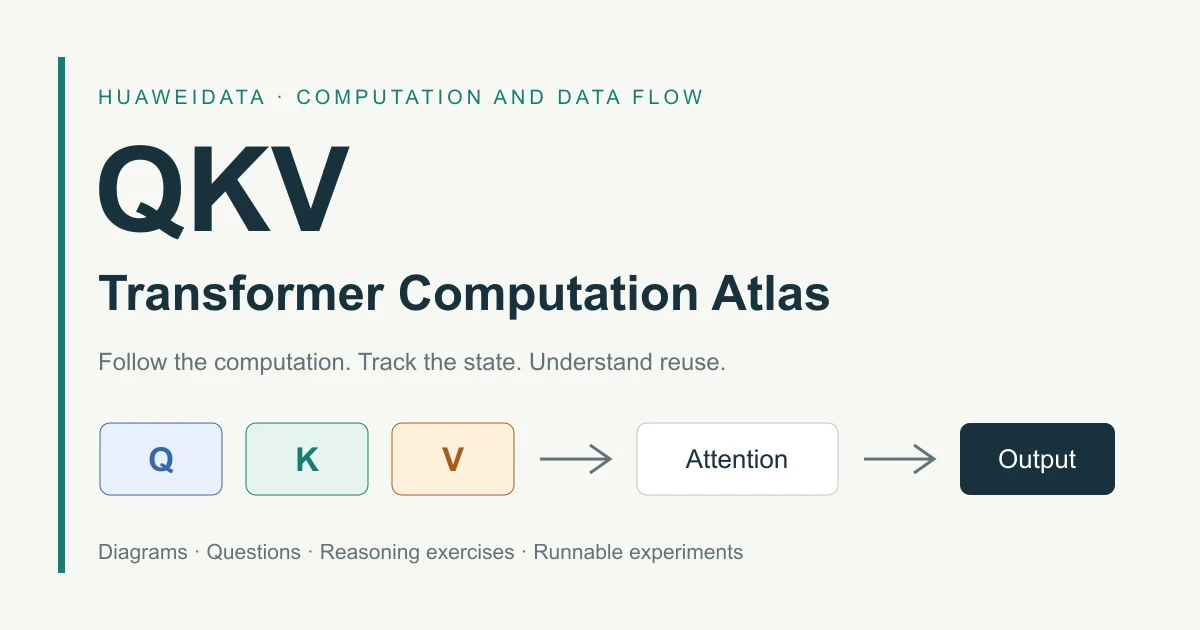 QKV: Transformer Computation Atlas
Follow Q, K and V through Transformer computation and data flow, from input processing to generation. Illustrated explanations, worked examples and exercises reveal how KV caches, attention, model architectures and speculative decoding work.
Read -
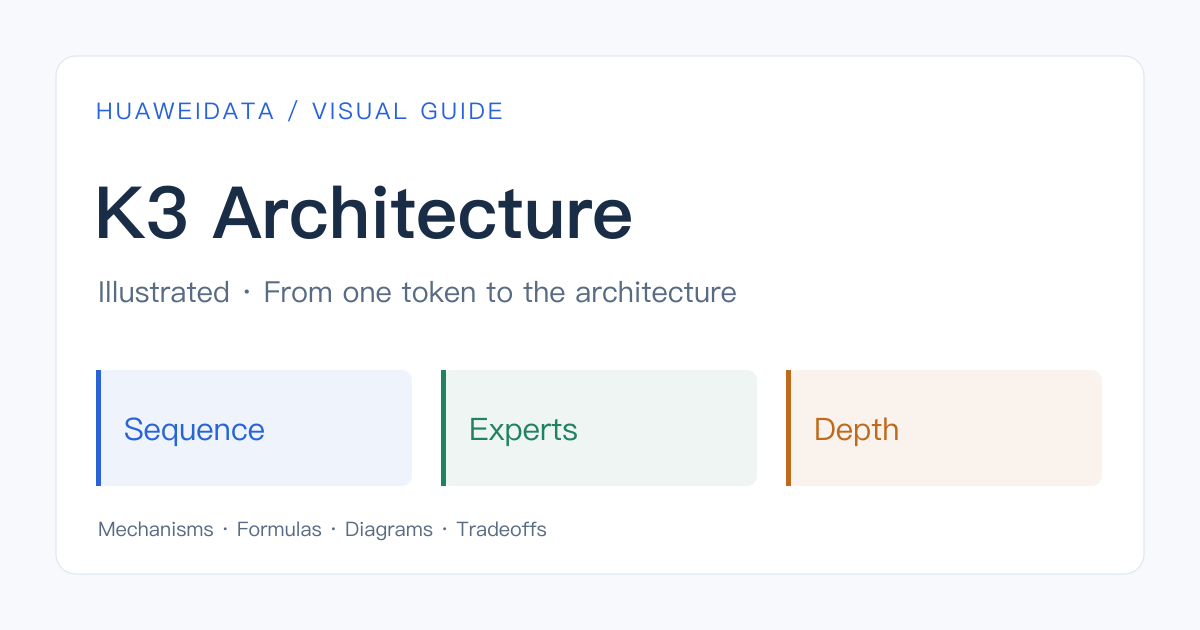 K3 Architecture Illustrated
Understand K3's experts, attention, and depth-wise information flow through the computation of a single token: illustrated chapters, derivations, numerical examples, and resource tradeoffs.
Read -
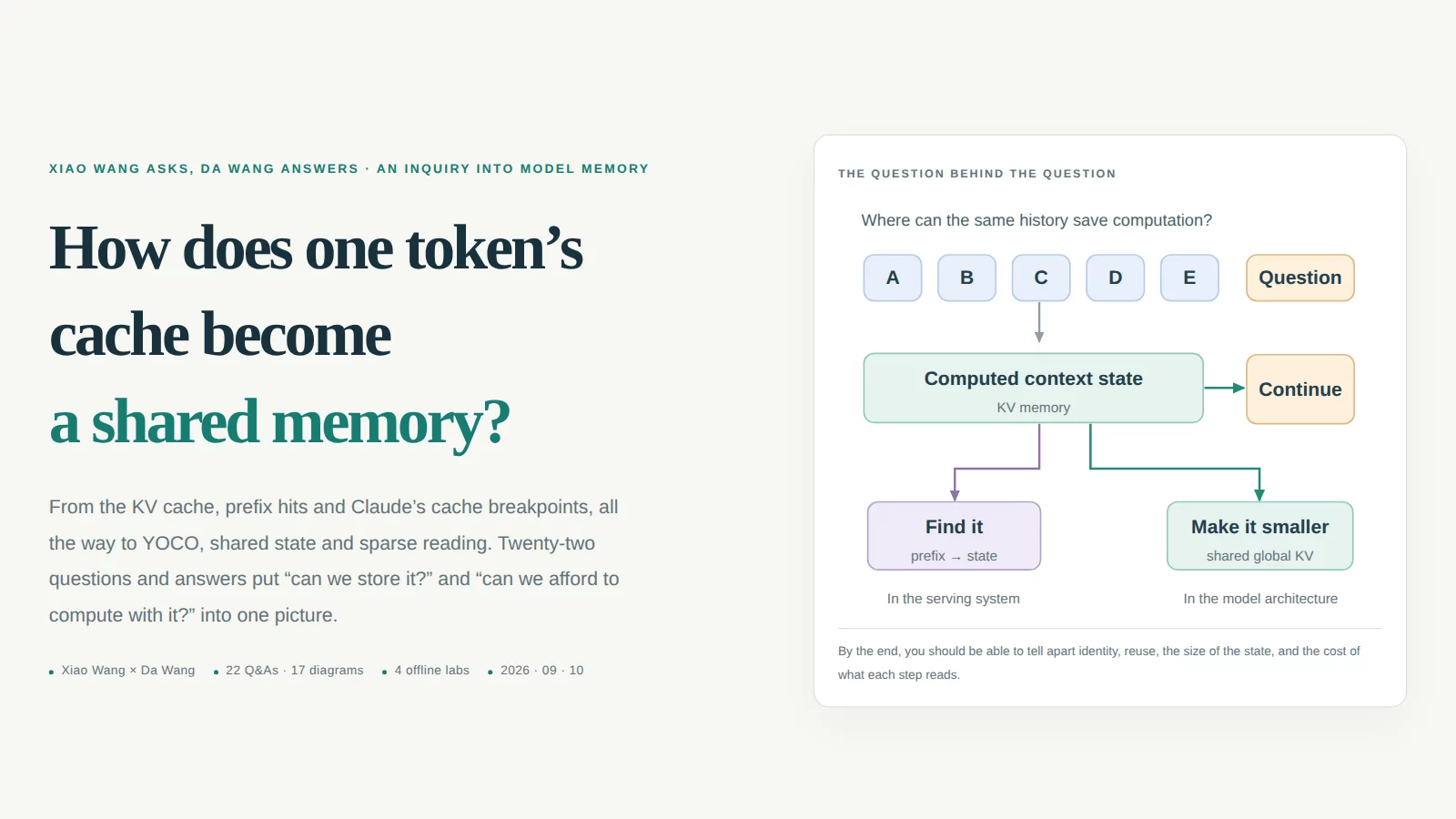 Xiao Wang Asks, Da Wang Answers: From KV Cache to YOCO and Shared Memory
22 questions and answers between Xiao Wang and Da Wang, with diagrams: the KV cache, chained hashes, Claude’s cache breakpoints, DeepSeek’s persistence, YOCO’s shared memory, an 890-byte conditional ledger, approximate restoration, sparse retrieval and Engram. 17 mechanism diagrams and 4 offline interactive labs.
Read -
 A Question's Journey - LLM from Input to Output
A full mechanism timeline from one prompt through context, tokenization, Transformer internals, generation, tool calls, sampling, latency, and reasoning budget.
Read